10 Things in 'The Silmarillion' I Truly Noticed While Reading Aloud
As I mentioned in my last post, reading ‘The Silmarillion’ out loud had me noticing things I don’t remember noticing before.
So, I thought I’d share ten of them.
To be clear, this post will include LOTS of SPOILERS, though, to be honest, they probably won’t make sense to anyone who hasn’t read this book.
1. Chapter 9 ‘The Flight of the Noldor’: Melkor makes his way back to Middle-earth and his domain, Angband, and he never departed from there except only once; was that to go among Men who were still far away in the east, to sow fear and mistrust in them?
2. Chapter 10 ‘Of The Sindar’: ‘Melian and her maidens filled the halls with woven hangings’ depicting ‘the deeds of the Valar’ and things that happened in Arda ‘since its beginning, and shadows of things that were yet to be.’ It’s that last part – things that were yet to be – that caught my attention as I wondered how far into the future those depictions went.
3. Chapter 19 ‘Beren and Lúthien’: After the Fourth Battle against Morgoth, one of the Three Houses of Men, who were allies of the Elves and fought with them, refused to surrender and ended up living as outlaws, fighting against Morgoth’s forces. The 12 men were led by Barahir, Beren’s father, and they endured five years of hardship before a tragic betrayal led to them being cruelly slain. But Beren survived, for his father had sent him on a dangerous mission to spy on the enemy. He then wandered alone, ‘a solitary outlaw’, for four years; I could not believe I hadn’t appreciated that before, that he’d been alone four whole years, fighting for his survival for four desperate years, before finding Lúthien.
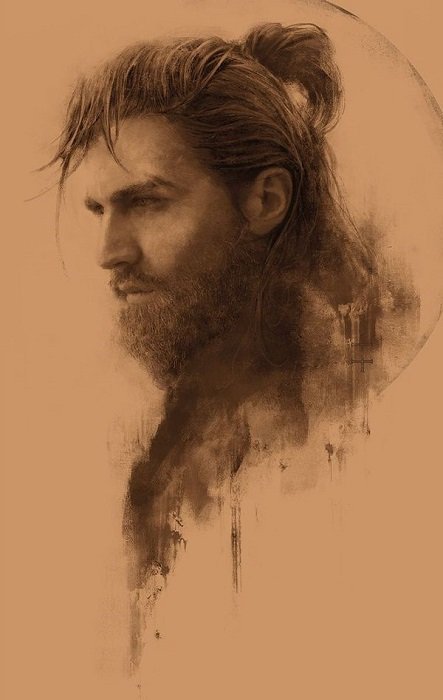
Beren (Eve Virtrue)
4. Still in the same chapter: Disguised, Beren and Lúthien have made their way to Angband to take a Silmaril from Morgoth’s crown, but they’re stopped by Morgoth’s dread wolf, Carcharoth as he scents ‘something strange in the air about them. But suddenly some power, descended from of old from divine race, possessed Lúthien…’ Again, something I don’t remember picking up before – power… from divine race – which has to refer to the power of her mother, Melian, who was a Maia; Maiar were spirits who helped the Valar, both also known as Holy Ones.
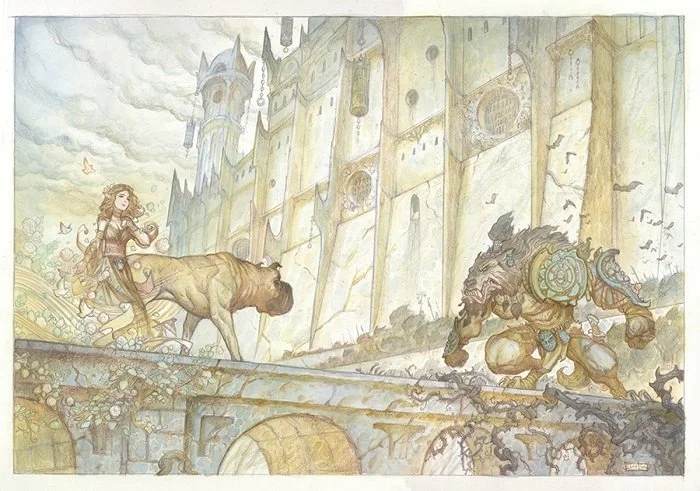
Lúthien at the Bridge (Justin Gerard)
5. Chapter 20 ‘Of the Fifth Battle: Nirnaeth Arnoediad’: Of all the Elves who stood against Morgoth, the one he feared most was Turgon, ‘for of old in Valinor… whenever [Turgon] drew near a shadow had fallen on [Morgoth’s] spirit, foreboding that in some time that yet lay hidden, from Turgon ruin should come to him.’ While I knew that Morgoth’s ruin did come from Turgon, I don’t seem to have taken note of this piece of foreshadowing. As an interesting aside, Turgon was Elrond’s great-grandfather.
6. Chapter 22 ‘Of the Ruin of Doriath’: This I definitely do not remember – ‘… as [the Dwarves] climbed the long slopes beneath Mount Dolmed there came forth the Shepherds of the Trees, and they drove the Dwarves into the shadowy woods of Ered Lindon…’ Ents! Why did I not notice that detail before?
7. Chapter 23 ‘Of Tuor and the Fall of Gondolin’: After Gondolin has fallen, as Tuor and his wife, Idril, Turgon’s daughter, lead their surviving people away from the enemy, they climb ‘the high places… cold and terrible’. For the first time, I wondered if that experience reminded Idril of when the Elves left Valinor over 500 years ago, when her mother fell to her death as they made the dangerous crossing of the freezing cold Helcaraxë.

Tuor, Idril and Earendil (LiigaKlavina)
8. Chapter 24 ‘Of the Voyage of Eärendil and the War of Wrath’: After the Valar defeated Morgoth and took him captive, Eönwë, ‘herald of the Elder King’ of the Valar ‘summoned the Elves of Beleriand to depart from Middle-earth.’ But the surviving sons of Fëanor, who’d made the Silmarils, Maedhros and Maglor, prepared, ‘with weariness and loathing, to attempt in despair the fulfilment of’ the oath that Fëanor had made and which his sons had also sworn, vowing to kill any who stood between them and the Silmarils. Reading the part where the brothers argued about it, I appreciated how wretched and heartsick Maglor was with that oath, and the killing and tragedies that had occurred because of it; he was prepared to face the consequences of breaking it. Also, he and Maedhros had taken over the care of Elrond and Elros, and I’m sure Maglor was saddened when the boys were taken from him, and they must have been upset too.
9. Akallabeth: Each time I’ve read ‘The Silmarillion’, I must admit I never paid as much attention to this section, which covers the Second Age. So, reading it aloud certainly brought things to my attention, namely this bit about Morgoth after the Valar judged him; I knew he was ‘shut… beyond the World in the Void… and he cannot… return again into the World… while the Lords of the West are still enthroned.’ But I didn’t appreciate that ‘the seeds that he had planted still grew… bearing evil fruit… For his will remained and guided his servants…’ That explains Sauron continuing as he did, the Orcs, and the men in the East who had fought on the side of Morgoth still leaning easily towards evil.
10. Of the Rings of Power and the Third Age: The One Ring was still lost, but Gandalf had discovered that Sauron was the Sorcerer of Dol Guldur. The White Council was summoned and Gandalf urged them to act fast and take him out while they had the chance. Saruman, however, downplayed the danger, saying the Ring had most likely rolled into the sea and was out of reach. But, unbeknownst to the others, Saruman had already turned traitor, wanting the Ring for himself – this was the part that stood out to me – he believed the only way the Ring could be found was if Sauron manifested again, which meant the Ring would then seek its Master. If the White Council attacked and drove Sauron out, weakening him further, the Ring would never be found.
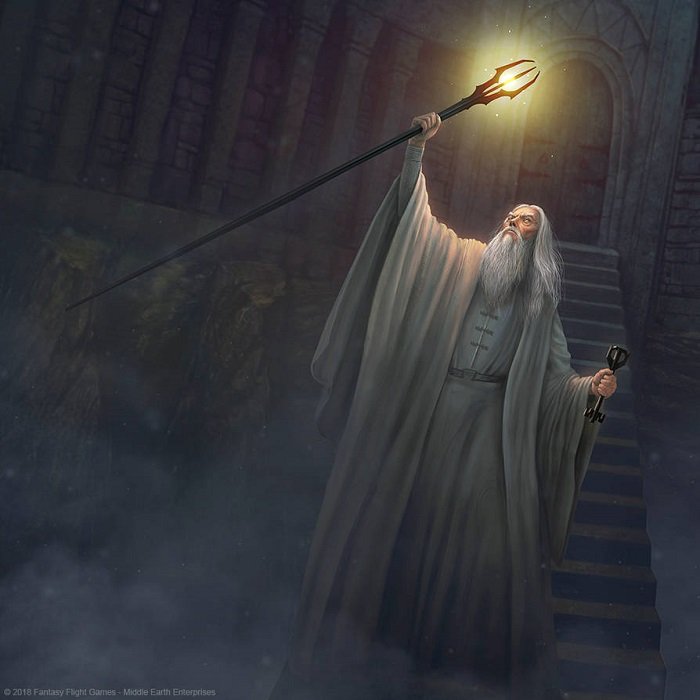
Saruman (ALMaNeGrA on Deviant Art)